GENESYS - GROUP IN ENERGY, ELECTRICITY AND SYSTEMICS

PRESENTATION

« Head » : Bruno Sareni

The GENESYS group is dedicated to designing the energy systems of the future centered on electricity, drawing in particular on its expertise in hydrogen technologies and system-oriented methodological approaches

The permanent team is composed of two full-time CNRS researchers, nine faculty members (including an emeritus professor and a tenure-track junior professor), a research engineer, and a design engineer. It is typically complemented by around fifteen doctoral students, along with several contract engineers, Master’s interns, and engineering students completing their final-year project.

TOPICS

The team focuses on three main research topics. The first two methodological and technological topics support the third, which focuses on applications at the heart of the energy transition.

Involved People  : Bruno Sareni, Xavier Roboam

  • Objectives

This topic aims to develop design approches that integrate in a structured way (either sequentially or simultaneously) the fundamental features of systems:

Architecture: the system and subsystem topology, the nature of the components (e.g. the type of storage element) as well as the technology associated with a given component

Sizing: scale effects, both in geometric and energy terms

Energy Mangagement: strategies for planning and controling power flows within the system

Environement: external factors influencing the system’s behavior (e.g. temperature, wind, or solar resources), which are inherently stochastic and intermittent, as well as the mission the system must accomplish (typically defined by the load profile to be satisfied)

  • Research Issues

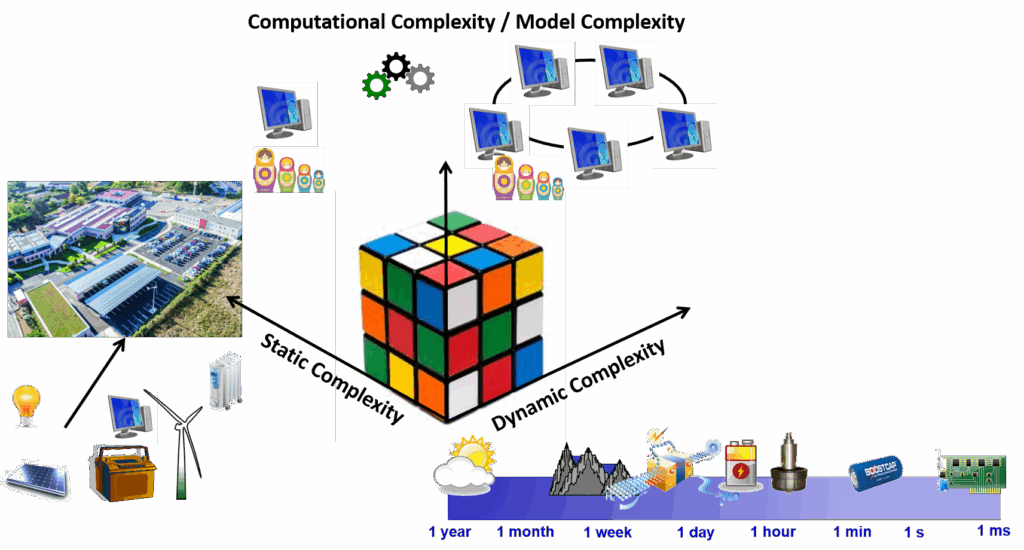
A comprehensive and integrated design that accounts for all the couplings between these different aspects inevitably encounters a high level of complexity, which justifies the development of ‘systemic’ approaches. This complexity can be expressed along three dimensions:

The static complexity, related to the size of multi-source, multi-load systems, to the heterogeneity of the elements to be combined, and to the coupled disciplinary domains. This level of complexity also includes the numerous constraints and criteria that are now expected to be considered in system design: energy efficiency, integration (mass and/or volume), reliability and operational safety, lifespan, environmental impact, and economic cost.

The dynamic complexity, related to the dispersion of modes within systems, ranging from:

Fast electrical modes (from less than a second to several minutes), affecting the control and management of dynamic storage devices such as electrochemical systems (batteries, supercapacitors) or flywheels.

Electro-matter modes (from a few hours to several days), influencing material transfers (water or hydrogen) in large-scale storage devices (e.g., pumped hydro storage, redox flow batteries).

Slow environmental evolution modes (from a few days to several months), associated with environmental cycles the system is exposed to (e.g., diurnal cycles and seasonal variation of solar irradiation). These modes are also characteristic of component aging processes within systems.

The resolution complexity, arising in particular from the increase in computation times of simulation models, is especially critical in an optimization context that requires a large number of system evaluations within its environment and mission framework. This resolution complexity is directly linked to the complexity of the models themselves, whose level of granularity is generally variable, thus determining the trade-off between accuracy and computational cost in the design process..

  • Ongoing Work

The methodologies under study aim to address the increasing levels of complexity in electrical engineering systems. They are structured around:

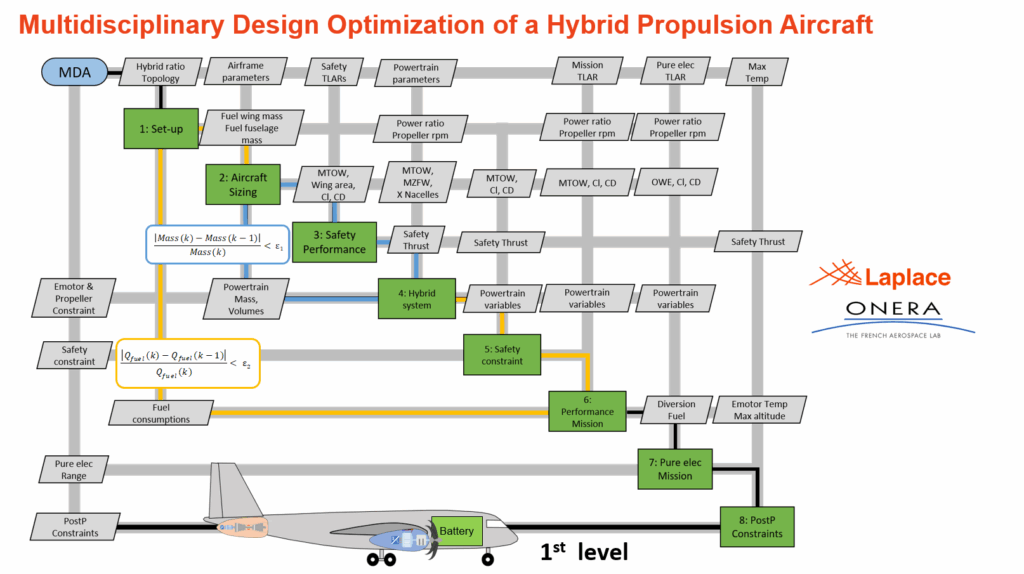
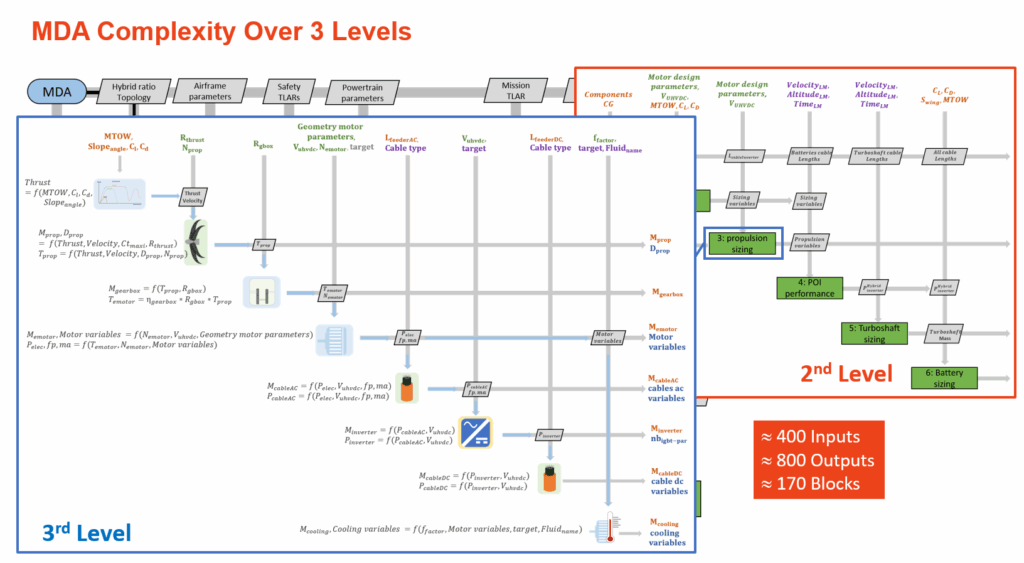
Multidisciplinary and multilevel optimization approaches (“Multidisciplinary Design Optimization”): these aim to organize the design process into several hierarchical levels, ensuring the integration of couplings between components and disciplines in complex systems. Current work on this topic, applied to ‘more electric’ aircraft, in collaboration with ONERA and IRT Saint-Exupéry, is leading to higher levels of complexity due to the number of disciplines involved (aerodynamics, aircraft structure, electric and thermal propulsion, cooling systems, electromagnetic compatibility…) and the number of parameters considered (up to a hundred decision variables and thousands of constraints).


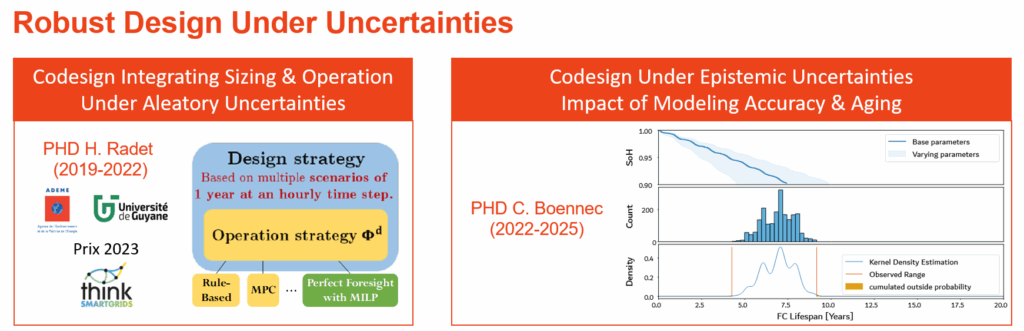
Robust design and optimization methods to guarantee system robustness with respect to uncertainties: uncertainties related to probabilistic variables and/or model accuracy.

Methods for analyzing and processing environmental variables for their integration within systems.

Parametric identification techniques for building and analyzing complex physical models of components (e.g., fuel cells/electrolyzers or Plasma processes).

The team’s research relies on the GENESYS simulation environment developed in Julia, as well as on the MDO tools of LAPLACE’s partners: FAST-OAD (ONERA) and GEMSEO (IRT Saint-Exupéry

Hydrogen Technologies: Fuell Cells and Electrolyzers

Involved People : Christophe Turpin, Amine Jaafar, Henri Schneider, Antony Plait, Santiago Suarez

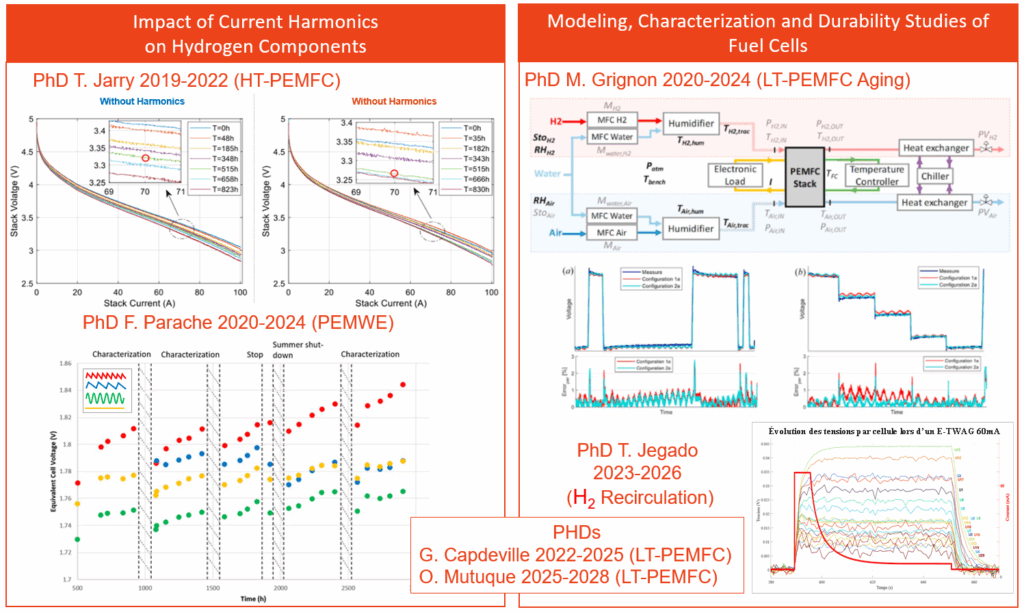
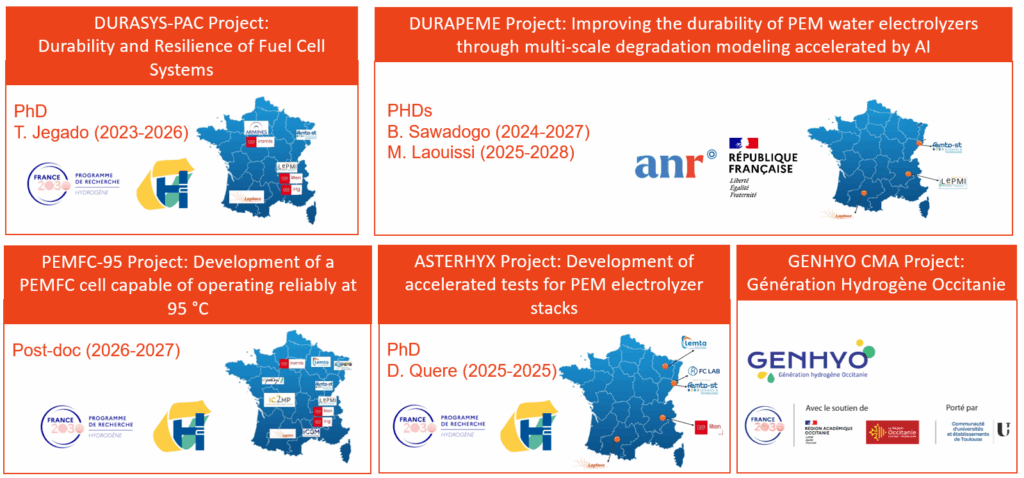
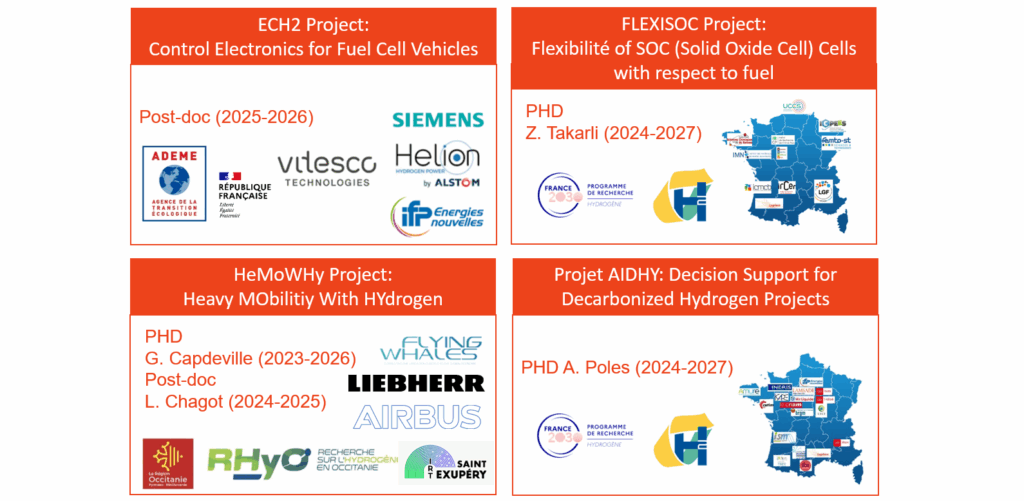
For more than twenty years, the GENESYS team has been developing recognized expertise in the study of hydrogen-based energy systems. The group focuses on characterizing the behavior of hydrogen production, storage, and conversion technologies in order to better understand their role within the power systems of tomorrow. This approach combines advanced modeling, experimentation, and multi-scale analysis to integrate these solutions in a safe and sustainable manner. The work carried out by the GENESYS team thus helps accelerate the transition toward more flexible, low-carbon energy systems capable of supporting the large-scale development of hydrogen-based renewable energies.

Performance Characterization:

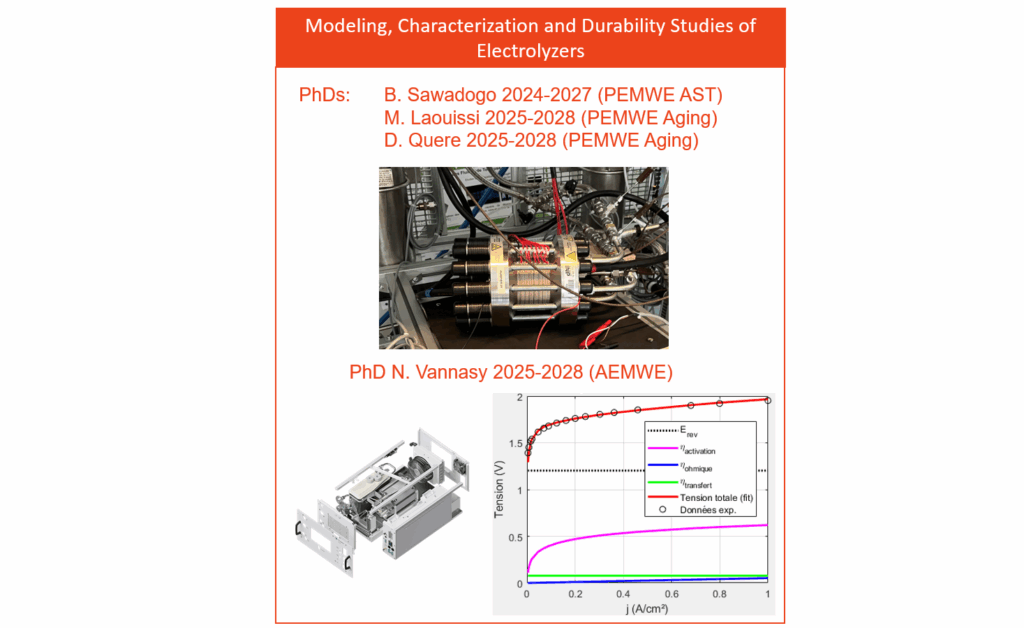
The performance characterization of fuel cells and electrolyzers relies on experimental approaches that incorporate test plans adapted to operating conditions (temperature, pressure, relative humidity, flow rate), as well as analytical techniques such as Electrochemical Impedance Spectroscopy (EIS) and cyclic voltammetry. These methods make it possible to evaluate their behavior under static and dynamic conditions according to usage constraints, while monitoring the evolution of their state of health. They aim in particular to quantify the reversible and irreversible losses that occur with aging and gradually lead to device degradation.

Modeling Approaches:

The modeling approaches developed for fuel cells and electrolyzers are based on two complementary classes of methods: knowledge-based models and signal-based analysis.
Knowledge-based models rely on a physical or phenomenological representation of the components, enabling the identification of key parameters related to aging. Data analysis, on the other hand, directly exploits measured quantities to detect behavioral drifts and extract health state indicators. For this second class of methods, the models used are empirical or derived from Artificial Intelligence (AI)  with machine learning.
Finally, a third category of modeling approaches consists of hybrid methods, which couple the two aforementioned types—for example, data-driven learning informed by physical models.

Health State Diagnosis (in collaboration with CODIASE):

The prognosis is based in particular on the superposition principle, considering that degradation mechanisms can be decomposed and analyzed individually before being recombined to predict the overall performance evolution. This approach enables more robust anticipation of reversible and irreversible losses over time.
Furthermore, enhancing diagnostic capabilities is a major area for improvement. It involves integrating new sensors dedicated to detecting compounds that indicate aging, as well as conducting post-mortem analyzes to precisely identify internal degradation mechanisms. The combination of this information helps refine models, strengthen the reliability of health monitoring, and optimize the lifespan of hydrogen systems.


All of this work contributes to system-level analyzes by building on hydrogen-based components: direct hybridization of fuel cell/battery/supercapacitor systems, control of couplings between electrolyzer/H₂ storage/fuel cell and between hydrogen liquefier/fuel cell, and the use of hydrogen combustion for heat production.

All of this research aims to contribute to the emergence of multifunctional hydrogen systems. In this context, the completion of the Technocampus Hydrogène Occitanie is planned. This center will have as its main mission the promotion of green mobility, notably through the design of innovative hydrogen engines for the aircraft of the future, as well as for trains and coaches. Covering an area of 9,000 m², this research, testing, technological innovation, and training center will be the largest in France. It will bring together industry and researchers in an unprecedented collaboration. The campus will play a key role in understanding and mastering hydrogen-related technologies, both at the component level and at the system level.

Involved People  : Hubert Piquet, Nicolas Roux, Xavier Roboam, Fabien Lacressonnière, Bruno Sareni, Santiago Suarez

This topic builds on the previous two and covers the typical applications that the GENESYS group is interested in.


  • Embedded networks (more electric aircraft, railways)

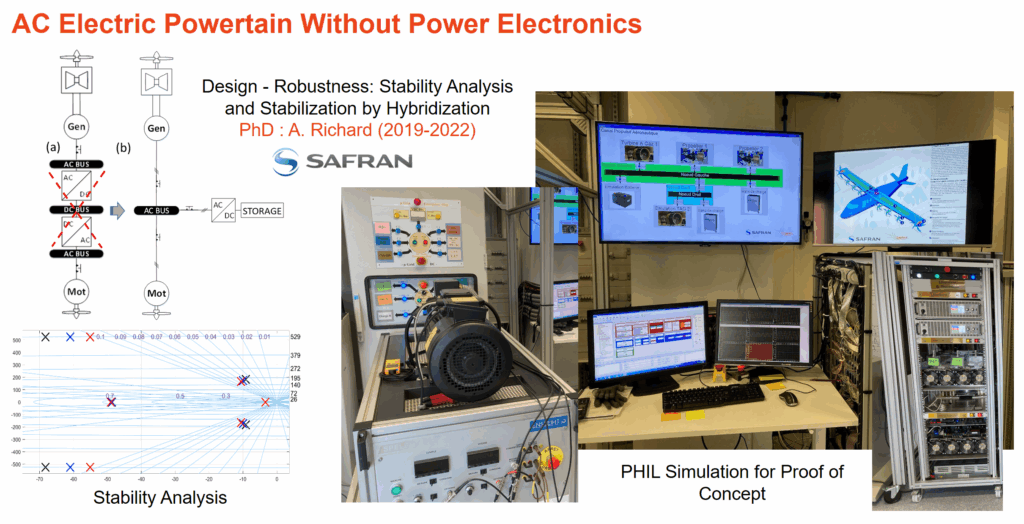
Over the past 20 years, the GENESYS team has carried out extensive work on the design of electrical networks in the context of more electric aircraft, drawing in particular on MDO approaches mentioned in the first topic. Research is now focusing more on hybrid propulsion, notably with the European HASTECS project. More recently, original concepts for electric propulsion have been developed with Safran Tech, with the work of A. Richard (2019-2022) resulting in a patent application. This work is continuing with the thesis of U. Ginestet (2022-2025).

Other studies also concern the railway sector, particularly the stability of power supply grids. The aim here is to identify the elements of the network that are likely to cause disruptions or instability and to propose palliative solutions in terms of sizing or energy management to remedy them.

  • Islanded or islandable microgrids with renewable energy

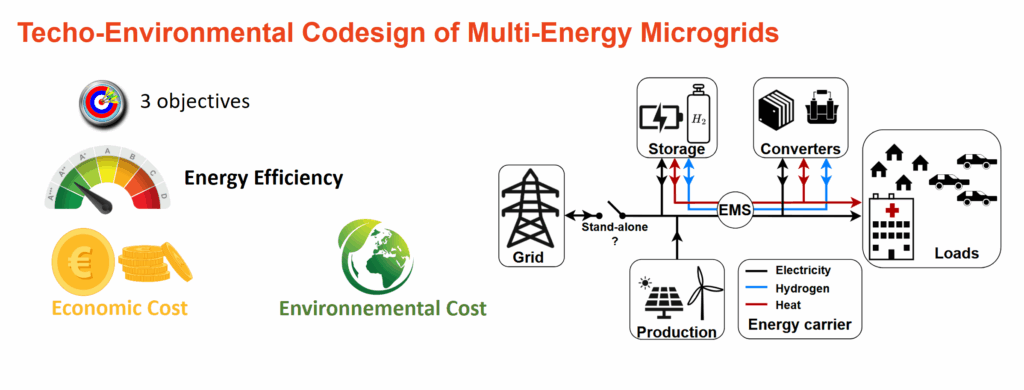
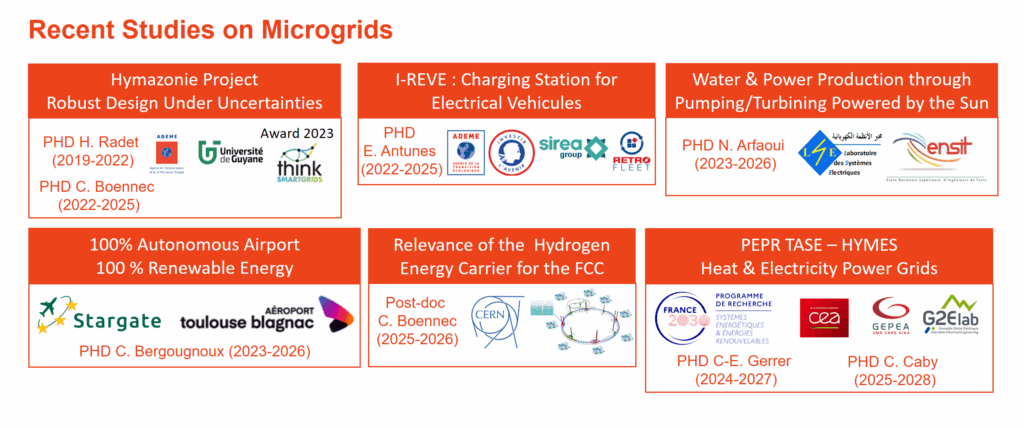
The team is also focusing on the design of islanded or islandable microgrids, with research focused on codesign (sizing integrating energy management) and Tech-Eco² (Techno-Economic & Environmental) optimization.

Our research is moving towards the design of multi-energy microgrids, using heat/cooling and hydrogen carriers for electricity production or storage in order to compensate for the intermittency of highly integrated renewable energies. Methodologically, and in connection with the 1st topic, our studies focus on the robust integration of environmental uncertainties (production capacity, consumption, pricing policies, emission factors, etc.) and model uncertainties (level of accuracy, parameterization, etc.). System-oriented desgin approaches are conducted over the entire life cycle, taking component aging into account.


  • Characterization and Integration of Batteries

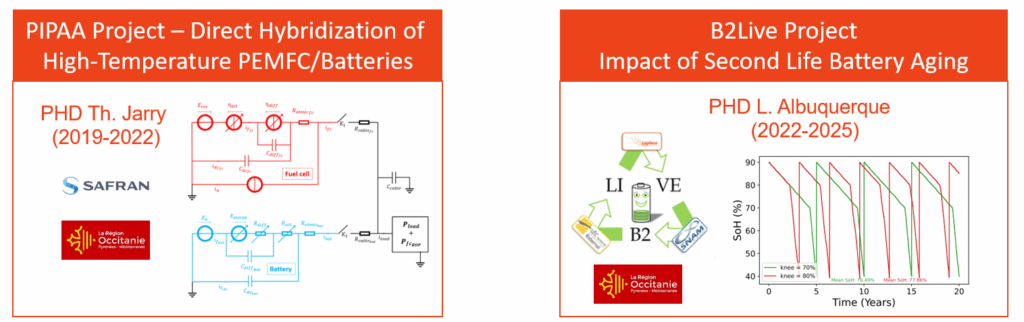
To implement battery storage into systems, our research focuses on battery modeling with the estimation of their state of health. The implementation of these battery models is based on characterization and aging campaigns carried out on the battery bench. Recent work (Lucas ALBUQUERQUE’s thesis – B2LIVE project https://ut3-toulouseinp.hal.science/hal-04505925v1), has made it possible to develop a model of second-life battery packs for the co-design of a microgrid. In the embedded field, the impact of direct fuel cell/battery coupling on the optimal sizing of the system has been studied (Thomas JARRY’s thesis – PIPAA project).

  • Power Supplies for Plasma Processes

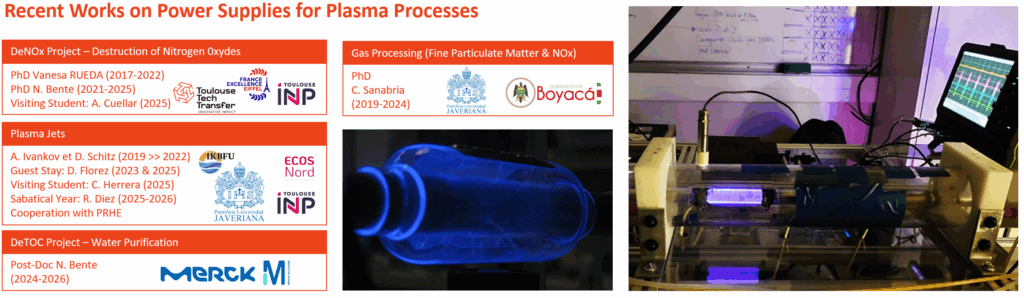
Originally focused on the design of specific static converters, our approach has now evolved toward a systemic dimension: the goal is to understand and leverage the interactions between the power circuit and the plasma in order to integrate the impact of energy injection characteristics (amplitude, frequency, pulse duration, modulation) on the process itself — such as UV generation, production of reactive species, pollutant destruction, and purification.

In a “holistic” design approach, we incorporate the characteristics of the reactor (DBD structures) and all the phenomena contributing to system performance — thermal behavior, gas flow, chemical kinetics, and more — into the design process.

The GENESYS group has many institutional and industrial partners:

  • Internal Partnerships within LAPLACE:

Teams : CS, MPP, CODIASE, GREM3, MDCE, PRHE

  • Regional Partnerships:
  • National Partnerships:
  • International Partnerships:
  • Industry Partnerships:

PLATFORMS AND TESTING FACILITIES

To carry out its research, the GENESYS group has several platforms and testing facilities at its disposal.

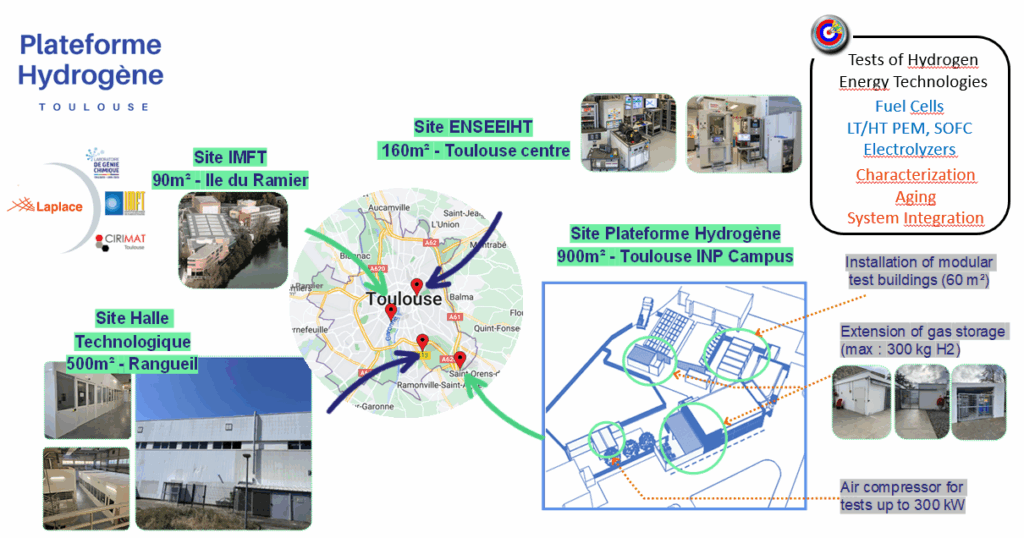
  • The Microgrid Plateform:

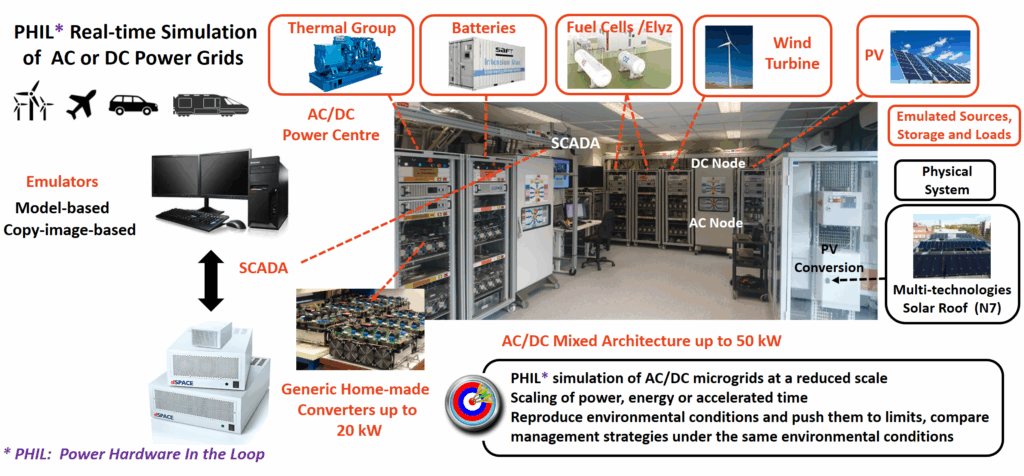
This platform enables PHIL (Power Hardware In the Loop) simulation of embedded or stationary AC/DC microgrids including multiple energy sources (PV, wind, thermal generators), storage devices (batteries, fuel cell/electrolyzer association) and emulated loads.

Two types of emulators are used:
– “model-based” emulators that reproduce a mathematical/physical model of the components
– “image-based” emulators that reproduce, with possible scaling, the behavior of a  “real” component tested under controlled environmental conditions.

The microgrid platform offers the possibility of simulating small-scale AC/DC network architectures up to 50 kW with scaling in terms of power, energy, or accelerated time. It allows energy management strategies to be compared for identical environmental conditions and real components compatible with the permissible power level to be tested.


This platform enables the testing of fuel cells (HT-/LT-PEM, SOFC) and electrolyzers (AWE, PEMWE, AEMWE, SOWE) at power levels of up to 240 kW, for the purpose of characterizing their physical behavior, aging, and integration into electrical systems.

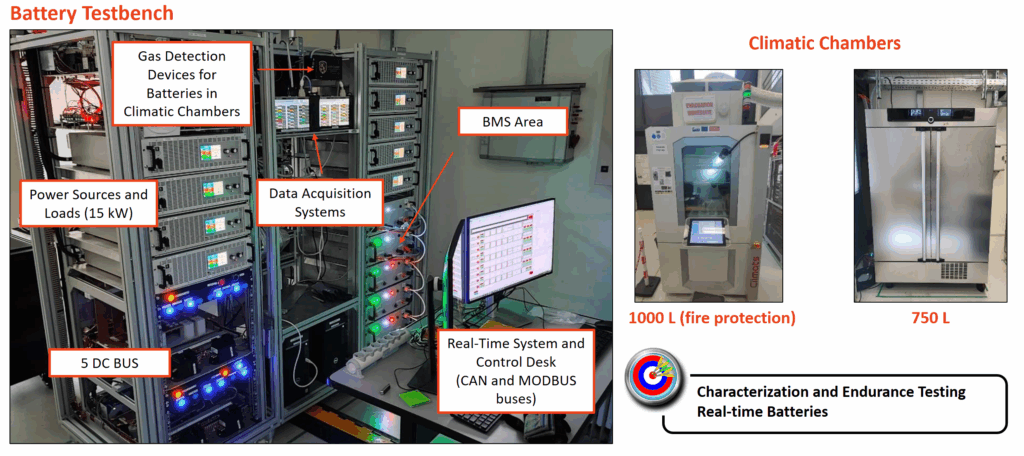
  • The Battery Testbench:

The GENESY group has a battery testing platform for aging tests. It is equipped with a climatic chamber and an oven, allowing the characterization of cell performance within a pack, as well as BMS balancing strategies, under different temperature conditions.

 
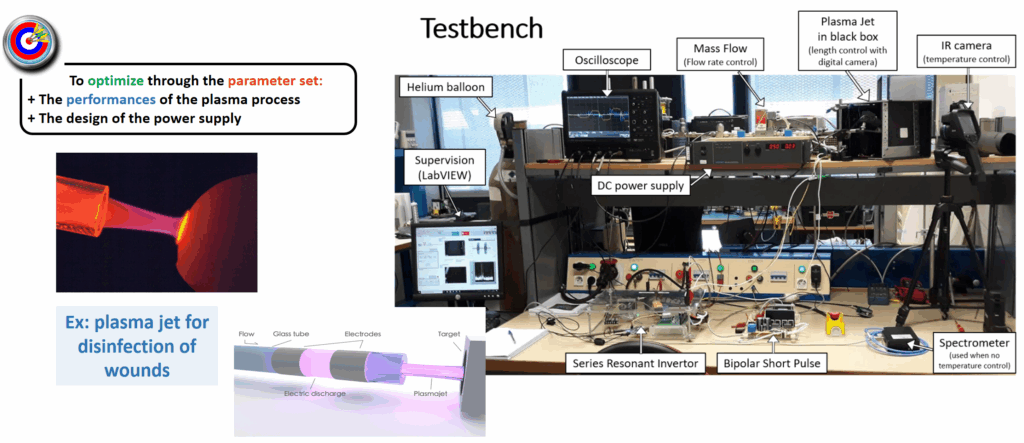
  • Testbenches for DBD or Plasma Processing Supplies:

The GENESYS group also has extensive expertise in developing power supply test benches for various plasma processes (surface treatment, pollution control, UV lamps, plasma jets for wound disinfection).


TEAM MEMBERS

NOM Prénom Corps / Tutelle Page Personnelle

PUBLICATIONS DU GROUPE

ACTUALITÉS DU GROUPE

UMR 5213 LABORATOIRE PLASMA ET CONVERSION D’ÉNERGIE
OUR
ACTUALITIES
INTERNAL PORTAL